
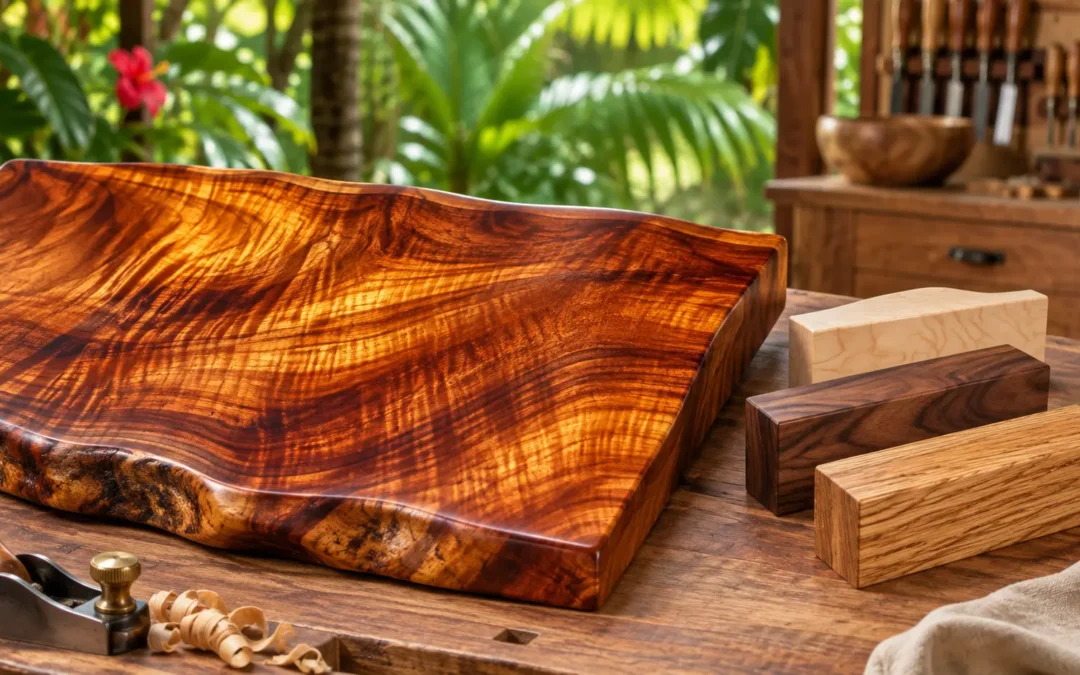
Hawaiian koa wood is one of the most distinctive hardwoods in the world, admired for its rich colors, intricate grain patterns, and deep connection to Hawaiian culture. From traditional canoes to handcrafted jewelry and musical instruments, koa has remained a valued material for generations.
But what makes Hawaiian koa wood unique compared to other hardwoods such as walnut, mahogany, maple, and oak?
The answer lies in its exclusive geographical origin, remarkable visual characteristics, versatile woodworking properties, and cultural significance.
Unlike many commercially available hardwoods, genuine Hawaiian koa comes from a tree species native exclusively to the Hawaiian Islands. Its striking grain patterns and natural color variations make each finished piece visually distinctive.
Whether you are researching premium hardwoods, considering Hawaiian koa wood accessories, or exploring authentic island craftsmanship, understanding koa’s characteristics can help you appreciate why this material holds such a special place in Hawaiian artistry.
What Is Hawaiian Koa Wood?
Hawaiian koa wood comes from the Acacia koa tree, a large native hardwood species found naturally only in Hawaiʻi.
The name koa is associated with the Hawaiian word for warrior, reflecting the wood’s historical relationship with strength, craftsmanship, and traditional Hawaiian life.
Koa trees can grow to impressive heights, producing valuable timber with colors ranging from golden brown to deep reddish chocolate.
The wood is especially recognized for its:
- Distinctive curly and wavy grain patterns
- Rich natural color variations
- Moderate hardness and strength
- Attractive polished appearance
- Suitability for woodworking and musical instruments
- Cultural and historical importance in Hawaiʻi
Today, Hawaiian koa is used for furniture, decorative accessories, jewelry, musical instruments, and handcrafted gifts.
Its combination of visual beauty and meaningful heritage distinguishes it from many other hardwood species.
What Makes Hawaiian Koa Unique?
Several characteristics contribute to Hawaiian koa’s reputation as a premium hardwood.
Although other hardwoods may offer similar strength, durability, or attractive grain patterns, koa combines these qualities with a distinctive appearance and a geographical origin that cannot be replicated elsewhere.
Exclusive Geography: A Hardwood Native to Hawaiʻi
One of the most important characteristics of Hawaiian koa is its geographical origin.
The Acacia koa tree is endemic to the Hawaiian Islands, meaning it occurs naturally nowhere else in the world.
Koa grows across several Hawaiian Islands, including Hawaiʻi Island, Maui, Oʻahu, Kauaʻi, Molokaʻi, and Lānaʻi.
The tree thrives in various environments, particularly upland forests with suitable rainfall and elevation.
Unlike widely distributed commercial hardwoods such as oak and maple, koa has a naturally restricted growing range.
This limited geographical distribution contributes to its distinctive identity and commercial value.
However, being native to Hawaiʻi does not automatically mean every koa product is sustainably sourced.
Responsible sourcing practices, forest conservation, and long-term reforestation efforts are important considerations when purchasing koa wood products.
For consumers, genuine Hawaiian koa represents a direct connection to the islands’ natural environment and woodworking heritage.
Luminescent 3D Grain Figures: The Beauty of Chatoyance
Perhaps the most visually remarkable characteristic of Hawaiian koa wood is its grain.
Koa frequently develops curly, wavy, and ribbon-like patterns that create a sense of movement across the wood’s surface.
Some pieces exhibit chatoyance, an optical effect that makes the grain appear to shimmer or change as light strikes it from different angles.
This phenomenon is sometimes described as a three-dimensional appearance because the patterns seem to shift beneath the polished surface.
Common koa grain characteristics include:
- Curly or fiddleback figures
- Wavy grain arrangements
- Ribbon-like color variations
- Interlocking grain patterns
- Iridescent reflections under changing light
The most highly figured pieces can display dramatic variations in brightness and depth.
Although other hardwoods, including maple and walnut, may also develop figured grain, highly figured koa is particularly prized for the combination of its natural colors and shimmering appearance.
This makes it an attractive material for decorative woodworking, jewelry, and premium handcrafted accessories.
No two pieces of koa wood have exactly the same grain pattern, giving finished products an individual appearance.
Color Spectrum: From Golden Honey to Deep Chocolate
Hawaiian koa wood features an impressive range of natural colors.
Depending on the individual tree, growing conditions, and section of timber, koa can exhibit shades ranging from light golden brown to rich reddish and chocolate tones.
Common color variations include:
Golden Brown: Warm, honey-colored tones that create a bright and welcoming appearance.
Reddish Brown: Deep, warm colors that resemble certain varieties of mahogany.
Chocolate Brown: Darker shades that provide a sophisticated appearance similar to walnut.
Mixed and Banded Colors: Contrasting streaks that create dramatic visual movement throughout the grain.
The combination of color and grain contributes significantly to koa’s decorative appeal.
A polished koa surface may reveal subtle variations that are less noticeable in unfinished wood.
These natural differences make koa especially attractive for products where the wood itself serves as the primary decorative feature.
Unlike painted or artificially patterned materials, koa’s appearance comes directly from its natural wood structure.
Structural Comparison to Walnut: Strength and Workability
Hawaiian koa shares several mechanical characteristics with American black walnut.
Both hardwoods offer a useful balance of strength, moderate density, and workability.
Koa has an average dried density of approximately 610 kilograms per cubic meter, or 38 pounds per cubic foot.
Its Janka hardness rating is approximately 1,170 pounds-force, placing it within a moderate hardness range.
These properties make koa suitable for numerous indoor woodworking applications.
Koa can be used for:
- Furniture and cabinetry
- Decorative wood accessories
- Jewelry components
- Musical instruments
- Carved ornaments
- Specialty woodworking projects
Like walnut, koa can be shaped, sanded, and polished to produce attractive finished surfaces.
However, highly figured koa may be more challenging to machine because its interlocking grain can cause tearout.
Experienced woodworkers often use sharp tools and careful finishing techniques to preserve its natural patterns.
Koa also demonstrates favorable dimensional stability when properly dried and maintained under suitable indoor conditions.
Although koa is strong enough for many furniture applications, it is not among the hardest commercial hardwoods.
Its value comes from the combination of beauty, mechanical performance, and craftsmanship rather than exceptional hardness alone.
Acoustic Tonewood Qualities: Why Koa Is Popular for Musical Instruments
Hawaiian koa has a long-standing association with musical instruments, particularly the ukulele.
Its attractive appearance and useful acoustic characteristics make it a popular choice among instrument makers.
A wood used for musical instruments is commonly called a tonewood.
Tonewoods are selected for qualities such as density, stiffness, resonance, stability, and suitability for instrument construction.
Hawaiian Koa and Ukulele Construction
Koa has become closely associated with traditional Hawaiian ukuleles.
Instrument makers frequently use koa for soundboards, backs, sides, and decorative components.
Koa ukuleles are appreciated for their warm appearance and distinctive tonal characteristics.
Depending on the instrument’s construction, koa may produce a balanced sound with clear articulation and a warm tonal character.
However, the sound of a musical instrument depends on more than wood species alone.
Important factors include:
- Instrument size and shape
- Wood thickness and stiffness
- Bracing design
- Construction quality
- String selection
- Playing technique
For this reason, not every koa instrument produces the same sound.
The wood’s acoustic properties should be considered alongside the craftsmanship and overall design of the instrument.
Koa Compared With Other Tonewoods
Different hardwoods and softwoods are used in musical instrument construction.
Mahogany is often selected for its warm tonal qualities, while spruce is widely used for soundboards because of its stiffness-to-weight characteristics.
Maple is frequently associated with clarity and projection in certain instrument designs.
Koa offers its own combination of density, visual appeal, and acoustic behavior.
For musicians, choosing koa may involve both tonal preferences and appreciation for Hawaiian craftsmanship.
Its beautiful grain also makes koa instruments highly desirable as decorative and collectible pieces.
Cultural and Historical Legacy of Hawaiian Koa Wood
Beyond its physical properties, Hawaiian koa carries significant cultural and historical meaning.
Long before modern woodworking industries developed, Native Hawaiians recognized koa as a valuable resource.
The wood played an important role in transportation, craftsmanship, and daily life.
Koa Wood in Traditional Hawaiian Canoes
One of koa’s most important historical uses was canoe construction.
Native Hawaiian craftsmen used large koa logs to create traditional canoes, including vessels used for fishing and ocean travel.
The tree’s size and woodworking characteristics made it suitable for carving substantial canoe hulls.
Canoes were essential to Hawaiian communities, supporting transportation, fishing, and connections between coastal settlements.
Producing a canoe required specialized skills, careful material selection, and extensive craftsmanship.
As a result, koa became closely connected with Hawaiian navigation and traditional woodworking knowledge.
Koa Wood and Hawaiian Royalty
Koa was also associated with Hawaiian chiefs and royalty.
Its strength, beauty, and cultural importance made it valuable for prestigious objects and traditional craftsmanship.
Historically, koa was used to create items such as weapons, ceremonial objects, and furnishings.
These applications contributed to the wood’s reputation as a material associated with strength and distinction.
Today, koa continues to represent a meaningful connection to Hawaiian cultural heritage.
Its use in contemporary accessories and decorative objects reflects a tradition of transforming natural materials into functional works of art.
Koa Wood in Modern Hawaiian Craftsmanship
Modern artisans continue to use koa in a wide variety of decorative and functional products.
Popular examples include:
- Koa wood jewelry
- Decorative pendants
- Engraved accessories
- Wooden keepsakes
- Desk accessories
- Collectible gifts
- Furniture and decorative objects
These products allow artisans to showcase koa’s natural grain while creating items suitable for everyday use.
For consumers, handcrafted koa products offer an opportunity to appreciate Hawaiian-inspired design through a material closely associated with the islands.
Koa vs. Other Common Hardwoods
Understanding how Hawaiian koa compares with other hardwoods can help explain its advantages and limitations.
While koa is valued for its visual appearance and cultural significance, other hardwood species may be more suitable for particular functional applications.
Hawaiian Koa vs. Walnut
American black walnut is one of the closest comparisons to Hawaiian koa in terms of mechanical performance.
Both hardwoods have moderate density, attractive grain patterns, and favorable woodworking characteristics.
Hawaiian Koa:
- Native exclusively to Hawaiʻi
- Golden, reddish, and chocolate color variations
- Frequently features curly or wavy grain
- Approximately 1,170 pounds-force Janka hardness
- Strong cultural connection to Hawaiian craftsmanship
Black Walnut:
- Native to North America
- Primarily medium to dark brown in appearance
- Often features straight or gently figured grain
- Approximately 1,010 pounds-force Janka hardness
- Widely used in premium furniture and cabinetry
Koa may appeal to buyers seeking more dramatic grain movement and Hawaiian cultural significance.
Walnut is often selected for its rich, understated appearance and established role in furniture making.
Both woods are suitable for many indoor decorative applications.
Hawaiian Koa vs. Mahogany
Koa and genuine mahogany share certain visual characteristics, particularly their warm reddish-brown tones.
However, their grain patterns and woodworking properties can differ.
Hawaiian Koa:
- Often features dramatic curly grain
- Displays a broad range of colors
- Offers moderate hardness
- Valued for decorative and specialty woodworking
Genuine Mahogany:
- Commonly features a relatively even grain
- Usually displays reddish-brown coloration
- Generally works and carves easily
- Widely used in cabinetry, furniture, and musical instruments
Mahogany is often preferred for applications requiring consistent grain and predictable machining.
Koa provides a more visually varied option for projects where natural figuring is a priority.
Hawaiian Koa vs. Maple
Maple is widely recognized for its strength, pale appearance, and versatility.
Hard maple is generally harder than koa, making it suitable for applications involving frequent wear.
Hawaiian Koa:
- Warm golden to reddish-brown colors
- Moderate hardness
- Often features curly or interlocking grain
- Commonly used in decorative woodworking
Hard Maple:
- Usually light cream or pale brown
- Approximately 1,450 pounds-force Janka hardness
- Suitable for flooring, cabinetry, and furniture
- Can also display curly or bird’s-eye grain
For projects where surface hardness is a primary concern, hard maple may be the more practical choice.
For decorative pieces featuring rich natural colors and dramatic grain, koa offers a different visual character.
Hawaiian Koa vs. Oak
Oak is one of the most familiar hardwoods used in furniture, flooring, and interior construction.
It is generally valued for its availability, strength, and recognizable grain.
Hawaiian Koa:
- Exclusive natural origin in Hawaiʻi
- Rich color variations
- Decorative curly and wavy grain
- Commonly associated with specialty craftsmanship
Red Oak:
- Widely available in North America
- Prominent open grain
- Approximately 1,290 pounds-force Janka hardness
- Frequently used for flooring and furniture
Oak is often more practical for large-scale construction and high-traffic applications.
Koa is better known for its distinctive appearance and use in decorative products.
Neither wood is universally superior. The appropriate choice depends on the intended application, design preferences, and maintenance requirements.
Is Hawaiian Koa Wood Durable?
Hawaiian koa offers good strength and moderate surface hardness for many indoor applications.
When properly dried, finished, and maintained, koa can provide reliable performance in furniture, decorative items, and accessories.
However, koa should not be confused with naturally decay-resistant hardwoods.
Untreated koa is susceptible to fungal decay and termite damage, particularly when exposed to unsuitable outdoor conditions.
To preserve koa wood products:
- Avoid prolonged exposure to moisture.
- Keep products away from excessive heat.
- Protect finished surfaces from harsh chemicals.
- Clean with a soft, dry cloth.
- Avoid extended exposure to direct sunlight.
- Follow any care instructions provided by the manufacturer.
For jewelry and small accessories, removing the item before swimming, bathing, or prolonged water exposure may help protect the finish.
Proper maintenance allows koa products to retain their attractive appearance while reducing unnecessary wear.
Why Is Hawaiian Koa Wood Valuable?
Several factors contribute to the value of Hawaiian koa wood.
Its limited natural distribution is one important consideration, but geographical exclusivity is not the only reason for its desirability.
Other contributing factors include the quality of the grain, usable timber availability, processing requirements, craftsmanship, and market demand.
Distinctive Natural Appearance
Highly figured koa wood can display striking patterns that are difficult to replicate artificially.
Curly grain and chatoyance are especially desirable in decorative woodworking.
Pieces featuring exceptional figuring may command greater attention than more ordinary grain patterns.
Limited Natural Distribution
Because koa is endemic to Hawaiʻi, its natural supply is geographically restricted.
The availability of suitable timber depends on forest conditions, land management, and responsible sourcing.
These considerations make koa different from hardwoods grown or commercially distributed across much larger regions.
Specialized Craftsmanship
Creating finished products from koa requires woodworking knowledge and attention to detail.
Highly figured pieces may require additional care during cutting, shaping, and polishing.
The finished product’s value therefore reflects not only the material but also the skill involved in transforming it.
Cultural Significance
Koa’s connection to traditional Hawaiian canoes, craftsmanship, and cultural history adds meaning beyond its physical characteristics.
For collectors and gift buyers, this heritage may contribute to the appeal of authentic Hawaiian koa products.
How to Identify Genuine Hawaiian Koa Wood
Recognizing genuine Hawaiian koa can be challenging because several other hardwoods share similar colors and grain characteristics.
Australian blackwood, for example, is closely related to koa and may appear visually similar.
Although appearance provides useful clues, it cannot always confirm a wood’s botanical identity.
Examine the Grain Patterns
Koa often features curly, wavy, or interlocking grain.
Some pieces display distinctive ribbon-like patterns and changing reflections under direct light.
However, not all genuine koa wood is highly figured.
Straight-grained pieces are also authentic koa.
Observe Natural Color Variations
Koa commonly displays golden, reddish-brown, and chocolate-brown tones.
These colors may appear in alternating bands or irregular patterns.
The exact appearance depends on the individual tree, wood section, and finishing method.
Verify the Material’s Origin
For buyers seeking genuine Hawaiian koa, sourcing information is particularly important.
Ask whether the material is identified as Acacia koa and whether the seller can provide reliable information about its origin.
Avoid assuming that any product described as Hawaiian-style wood is made from genuine koa.
Evaluate the Quality of Craftsmanship
A well-made koa product should have smooth finishing, carefully shaped details, and secure construction appropriate to its intended use.
Look for consistent craftsmanship rather than relying solely on the wood’s color.
High-quality finishing can enhance the natural grain while providing additional surface protection.
Explore Hawaiian Koa Treasures at DBI Hawaii
At DBI Hawaii, we celebrate Hawaiian-inspired craftsmanship through our collection of decorative gifts, accessories, and island treasures.
Our Hawaiian Koa Treasures Collection features distinctive products that showcase the natural beauty of koa wood.
From jewelry to functional keepsakes, koa accessories offer a meaningful way to incorporate Hawaiian craftsmanship into everyday life.
Hawaiian Koa Jewelry and Pendants
Koa wood is a popular material for decorative jewelry because of its natural warmth and distinctive grain.
Its rich colors complement carved, engraved, and polished designs.
Koa jewelry can provide an attractive alternative to conventional accessories made from metal or synthetic materials.
Explore our Hawaiian Koa Treasures to discover island-inspired jewelry and accessories.
Hawaiian Koa Fish Hook Pendants
Fish hook designs are popular in Hawaiian-inspired jewelry.
Their distinctive shape creates an attractive combination of traditional island imagery and decorative craftsmanship.
Koa fish hook pendants showcase the wood’s natural grain while offering a recognizable design.
Discover our Engraved Hawaiian Koa Fish Hooks for available styles.
Hawaiian Koa Specialty Gifts
Koa is also used to create practical accessories and keepsakes.
Its attractive appearance makes it suitable for smaller decorative objects, including bookmarks, letter openers, and desk accessories.
These products allow the wood’s natural grain to remain a central feature.
Explore our Hawaiian Koa Specialty Items for unique gift ideas.
Frequently Asked Questions About Hawaiian Koa Wood
What makes Hawaiian koa wood different from other hardwoods?
Hawaiian koa wood is distinctive because it comes from a tree species native exclusively to Hawaiʻi. It features rich golden to reddish-brown colors, curly grain patterns, and occasional chatoyance that creates a shimmering appearance. Koa also holds cultural significance through its historical use in Hawaiian canoes, woodworking, and traditional craftsmanship.
Is Hawaiian koa wood harder than walnut?
Hawaiian koa is slightly harder than American black walnut according to commonly published Janka hardness ratings. Koa averages approximately 1,170 pounds-force, while black walnut averages around 1,010 pounds-force. However, both woods have similar mechanical properties and are suitable for many indoor woodworking applications.
Why is Hawaiian koa wood so expensive?
Hawaiian koa wood can be expensive because of its limited natural distribution, timber availability, distinctive grain patterns, and demand for specialty woodworking. Highly figured koa may be particularly valuable. The price of a finished product also depends on its size, material quality, craftsmanship, and sourcing.
Is Hawaiian koa wood good for jewelry?
Yes. Hawaiian koa is suitable for jewelry because of its attractive colors, moderate hardness, and distinctive grain. It is commonly used for pendants, earrings, and other decorative accessories. Proper care is important because prolonged exposure to moisture, harsh chemicals, or excessive sunlight can damage the finish.
How can you tell if Hawaiian koa wood is real?
Genuine Hawaiian koa often features warm brown tones and curly or wavy grain patterns, but appearance alone cannot reliably confirm authenticity. Other woods, particularly Australian blackwood, may look similar. The most reliable approach is to purchase from a reputable seller who can provide clear information about the wood species and geographical origin.
Discover the Natural Beauty of Hawaiian Koa Wood
Hawaiian koa wood stands apart from other hardwoods through its distinctive combination of geographical exclusivity, rich color variations, intricate grain patterns, and cultural heritage.
While walnut, mahogany, maple, and oak each offer practical advantages, koa provides an especially attractive option for decorative woodworking and island-inspired accessories.
Its shimmering grain, warm natural tones, and connection to Hawaiian history make it a meaningful material for artisans, collectors, and gift buyers.
Understanding these characteristics helps explain why koa remains a valued part of Hawaiian craftsmanship.
At DBI Hawaii, our Hawaiian Koa Treasures collection celebrates the natural beauty of this remarkable hardwood through distinctive jewelry, accessories, and handcrafted gifts.
Explore the Hawaiian Koa Treasures Collection and discover unique pieces inspired by Hawaiʻi’s natural beauty and cultural heritage.